UNGA 72: Factual Guide for Resolution
This guide provides factual support to the operative paragraphs of the General Assembly Draft Resolution. Events highlighted in this guide took place from January 2017 through the end of September 2017.
This guide provides factual support to the operative paragraphs of the General Assembly Draft Resolution. Events highlighted in this guide took place from January 2017 through the end of September 2017.
Download PDF
In this Universal Periodic Review (UPR) midterm report, ARTICLE 19 and Impact Iran assess the progress made by the Islamic Republic of Iran (Iran) in implementing freedom of expression related recommendations received during the second cycle in October 2014. Iran’s third cycle review is due to take place November 2019.
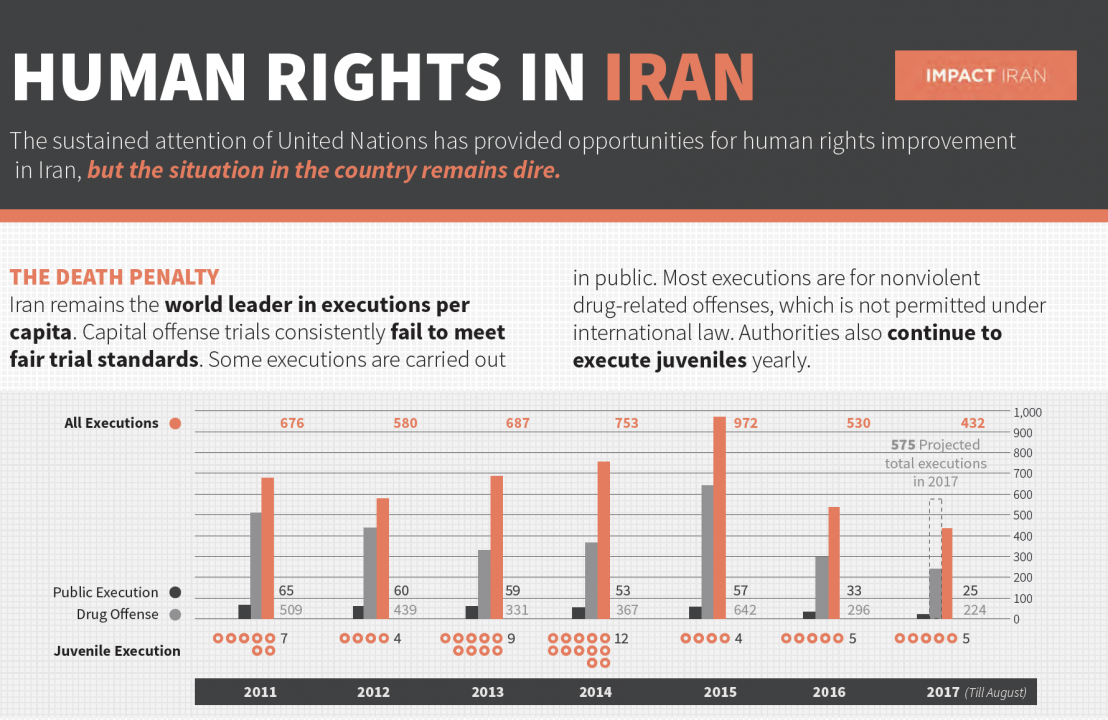
The sustained attention of United Nations has provided opportunities for human rights improvement in Iran, but the situation in the country remains dire.
Iran remains the world leader in executions per capita. Capital offense trials consistently fail to meet fair trial standards. Some executions are carried out in public. Most executions are for nonviolent drug-related offenses, which is not permitted under international law. Authorities also continue to execute juveniles yearly.
The Islamic Republic of Iran has been actively engaged in shaping the post-2015 development agenda, and volunteered to present its progress towards realizing the SDGs at the Volunteer National Review (VNR) during the second annual High-level Political Forum in July 2017.
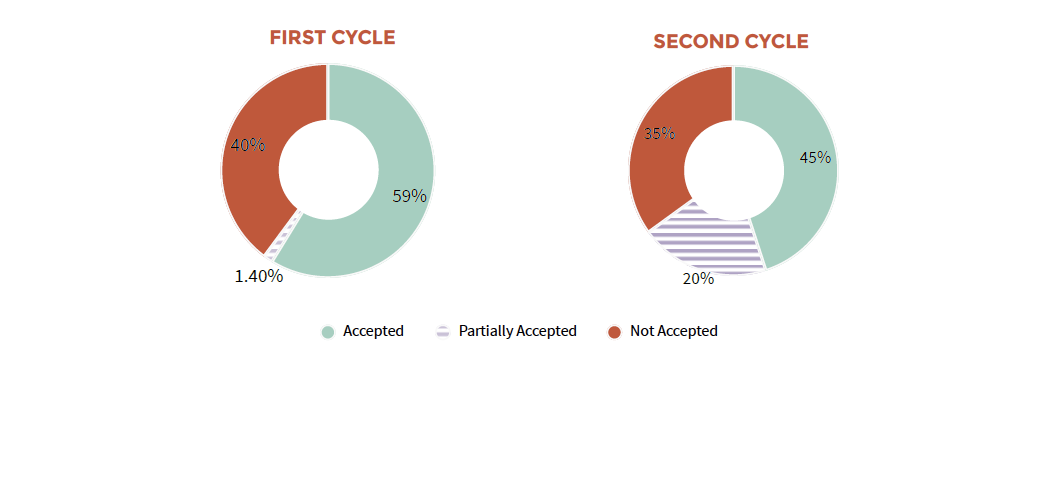
The UPR is a human rights mechanism uniquely favored by many member states, including the Islamic Republic of Iran. Indeed, Iran has stated that the UPR is the “most pertinent, effective and trustful UN mechanism for the review of human rights situation of all States.” Iran’s approach to the UPR, however, raises questions about its level of commitment to the mechanism, as well as to upholding its international human rights obligations overall.
The UPR is a dynamic process through which any UN member state, as a peer, can propose recommendations to a “State under review” on how to best advance human rights in their respective countries. Recommendations accepted by the state then become a framework for its promotion of human rights, as well as for stakeholders to dialogue with the state and measure its progress.
Website Twitter Facebook Instagram
Ahwaz Human Rights Organization (AHRO) is an international human rights advocacy organization, who supports and advocates for the Ahwazi Arabs – a national and linguistic minority, and an oppressed and persecuted ethnic group in the Southwestern Iranian province of Khuzestan (also called Al-Ahwaz or Arabistan).

Baloch Campaign is a non-governmental, human rights and educational organization founded in 2012, that focuses on defending the rights of the Baloch people, strengthening Baloch civil society, educating its audience on human rights, and providing up-to-date news coverage and reports.
Website Twitter Facebook Instagram
Balochistan Human Rights Group (BHRG) is an independent and non-profit human rights organization that focuses on research, documentation, and communication. BHRG provides relevant, verified and up-to-date information regarding the human rights situation in Western (Iranian) Balochistan.
Website Instagram
Founded in 2001, the Defenders of Human Rights Center (DHRC) is an Iranian human rights organization which advocates for the rights of women, political prisoners, and minorities in Iran. Its president is 2003 Nobel Peace Prize laureate Shirin Ebadi, and its vice president is 2023 Nobel Peace Prize laureate Narges Mohammedi, currently incarcerated in Evin prison.
Website Twitter Facebook Instagram
KURDPA is an independent news agency and the leading source for the latest information on Kurdistan in Iran, with daily coverage in three languages. Founded in 2011, KURDPA’s on-the-ground reporting highlights human rights concerns affecting the Iranian Kurdish community.
Website Twitter Facebook Instagram
Rasank is an independent, analysis-driven media organization, created and developed in collaboration with Baloch civil and human rights activists. Rasank provides news and analysis on the Baluchistan region and Iran, with a focus on human rights.